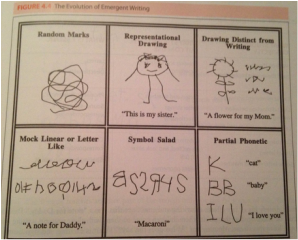
 Figure 4.4 taken from Chapter 4 of Words Their Way Fifth Edition
Characteristics of Emergent Reading
Video Clip from YouTube of a Child Doing Pretend Reading
Memory reading is a more accurate reading of the text. The child points to the print and coordinates his/her spoken words with the words on the page. During this stage, children learn about directionality, or the left to right, top to bottom direction used for reading. Students at this stage do not yet finger point or track words accurately yet--this skill comes with the "concept of a word" that shows up at the letter name-alphabetic stage.
Characteristics of Emergent Writing
Bear, D., & Invernizzi, M. (2012). Word Study for Phonics, Vocabulary, and Spelling Instruction (5th ed.). Boston: Pearson/Allyn and Bacon.
- Pretend Reading
Video Clip from YouTube of a Child Doing Pretend Reading
- Memory Reading
Memory reading is a more accurate reading of the text. The child points to the print and coordinates his/her spoken words with the words on the page. During this stage, children learn about directionality, or the left to right, top to bottom direction used for reading. Students at this stage do not yet finger point or track words accurately yet--this skill comes with the "concept of a word" that shows up at the letter name-alphabetic stage.
Characteristics of Emergent Writing
- Early Emergent Stage
- Middle Emergent Stage
- Late Emergent Stage
Bear, D., & Invernizzi, M. (2012). Word Study for Phonics, Vocabulary, and Spelling Instruction (5th ed.). Boston: Pearson/Allyn and Bacon.
|
|
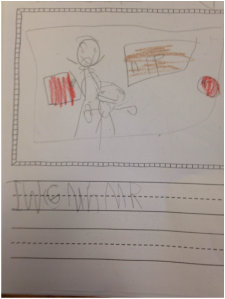
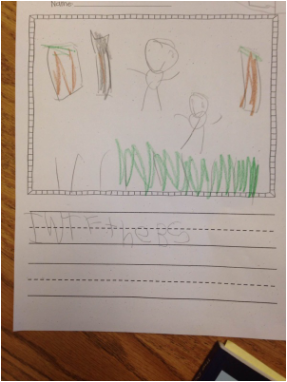
Late Emergent Writing Sample: Late Emergent Writing Sample:
IWGMhMR = "I went to get my hammer." IWTFtheBS = "I wait for the bus."
IWGMhMR = "I went to get my hammer." IWTFtheBS = "I wait for the bus."
